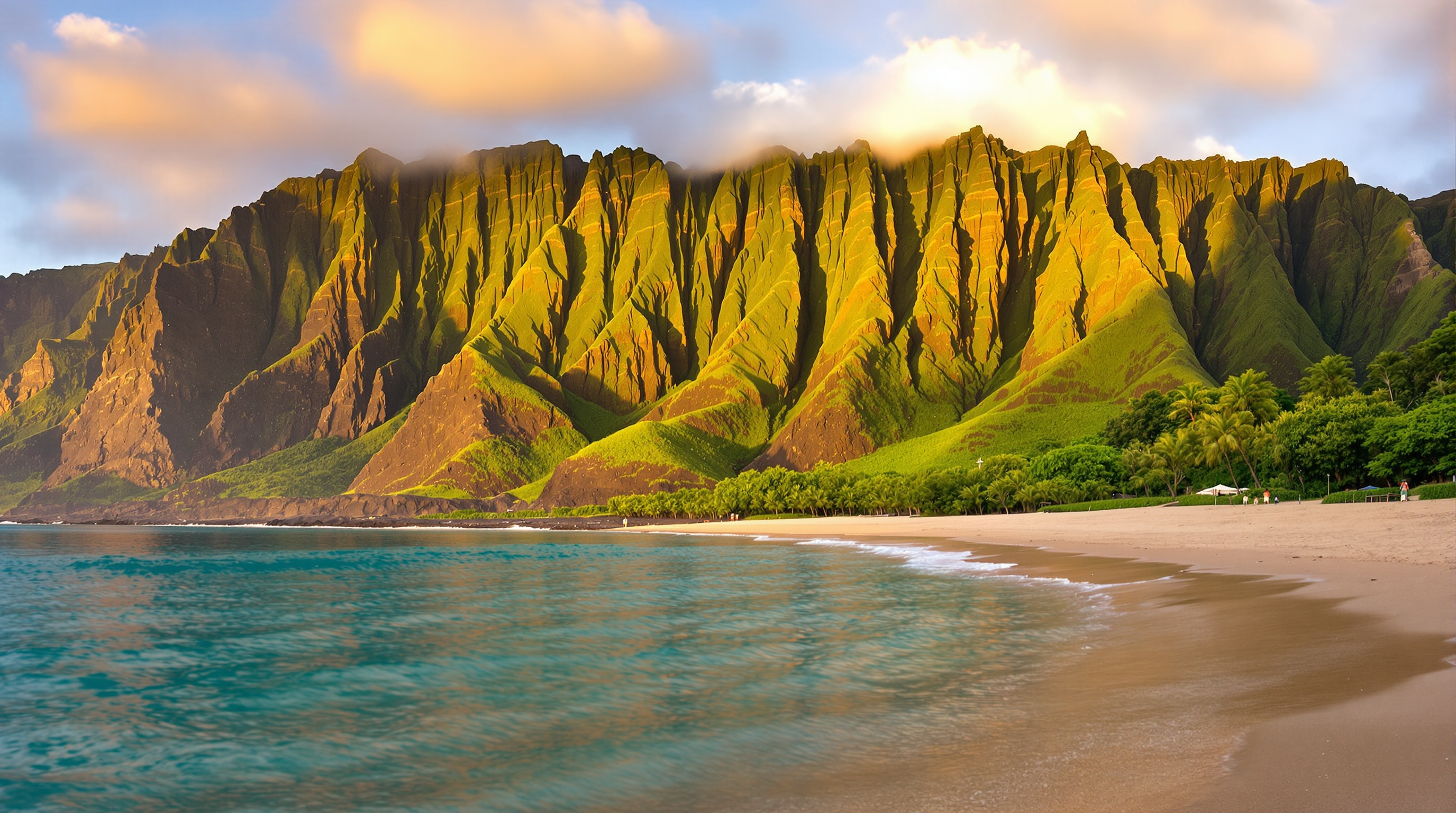
Ke'e is where Kauai's road ends and the Na Pali coast begins. The beach sits in a reef-protected pocket beneath Makana's fluted cliffs, and at sunset in summer it may be the single most beautiful place on the island to point a camera. The studio used it sparingly - access has never been simple, and is now formally rationed - but when a session demanded the ultimate backdrop, this was the ultimate backdrop.
Why Photographers Love It
The cliff line. Nowhere else can a portrait subject stand on friendly sand with the beginning of the Na Pali coast towering directly behind them - two thousand feet of green pleats catching the last light. The summer lagoon adds a second act: shallow, clear and calm inside the reef, with coral heads visible through turquoise water. Between cliffs, lagoon, hala groves at the back of the sand and the long view down the coast, a photographer can produce a varied album without moving a hundred yards.
Plan for the Reservation System
This is the practical heart of the matter: Ke'e lies within Haena State Park, and entry for non-residents now requires advance reservations for parking or shuttle, made through the official Haena State Park system. Sunset slots are the first to vanish - book as far ahead as the window allows. Hawaii residents with ID may enter without a reservation but still face the small parking lot. Commercial photography in state parks additionally requires a permit through the state film office. None of this is optional, and rangers do check.
DLNR lists a $5 entry fee per non-resident and $10 parking per vehicle, with Hawaii residents exempt. Reservations open 30 days ahead. Parking covers only the chosen time slot; a stay from opening until sunset needs all three slots. Plan the photographs around the reserved window rather than assuming one parking reservation lasts all day.
Access notices take priority. In the Hawaiʻi Tourism Authority's 29 September 2026 notice, Kūhiō Highway from Princeville to Kēʻē was limited to local traffic. Under the state parks division's 8 October 2026 notice, Hāʻena remained closed. Check later notices before setting out.
Fees, reservation windows and the other rules a photographer meets are collected in the guide to Kauai park reservations, permits and drone rules.
Light and Timing
Summer is the season: the sun sets over the ocean off the Na Pali coast, backlighting the cliffs and pouring gold across the lagoon. Aim to be on the sand ninety minutes before sunset, work the cliff backdrop first in directional light, then turn for silhouettes as the sun drops. In winter the sun sets behind the ridge and enormous surf closes the lagoon - the beach becomes a spectacle rather than a portrait venue. Mornings year-round are quiet and softly shaded by the cliffs, with the crowds absent.
Conditions and Safety
Inside the summer reef, Ke'e is one of the gentler north shore swims; outside it, or in any winter swell, the current that sweeps toward the open coast is genuinely dangerous. Lifeguards staff the beach - heed them. Check Hawaii Beach Safety the day of your visit. The wet lava at the point and the reef flat are protected and slippery; keep portraits on the sand.
Composition Ideas
- Subjects low on the sand, camera lower, Makana's full height stacked behind with a wide lens.
- Long-lens compression down the Na Pali coast as cliffs recede into blue haze layers.
- Lagoon reflections at dead calm - the cliffs doubled in the shallows.
- Hala grove portraits at the back of the beach for shade and texture variety.
Season by Season
Ke'e's seasons are administrative as much as meteorological. Summer - the photographic season, with its swimmable lagoon and ocean sunsets - is also peak reservation pressure: sunset entry slots for Haena State Park can vanish the moment the booking window opens, so set a calendar reminder for the release date and book the instant it arrives. Winter trades the lagoon for spectacle; the beach remains open on many days and photographs powerfully from the high sand, but plan it as a landscape session, not a portrait swim. Shoulder months are the insider play: May and September keep most of summer's gentleness with measurably easier reservations and emptier frames. Year-round, the cliffs shade the beach early in the morning - the soft-light window before the day-trippers arrive is the least-known good hour at the island's most famous road's end.
If reservations are gone, Tunnels Beach delivers the same mountain-over-reef drama with simpler access, and Lumahai covers the wild-and-empty brief. All three are detailed in the location library.