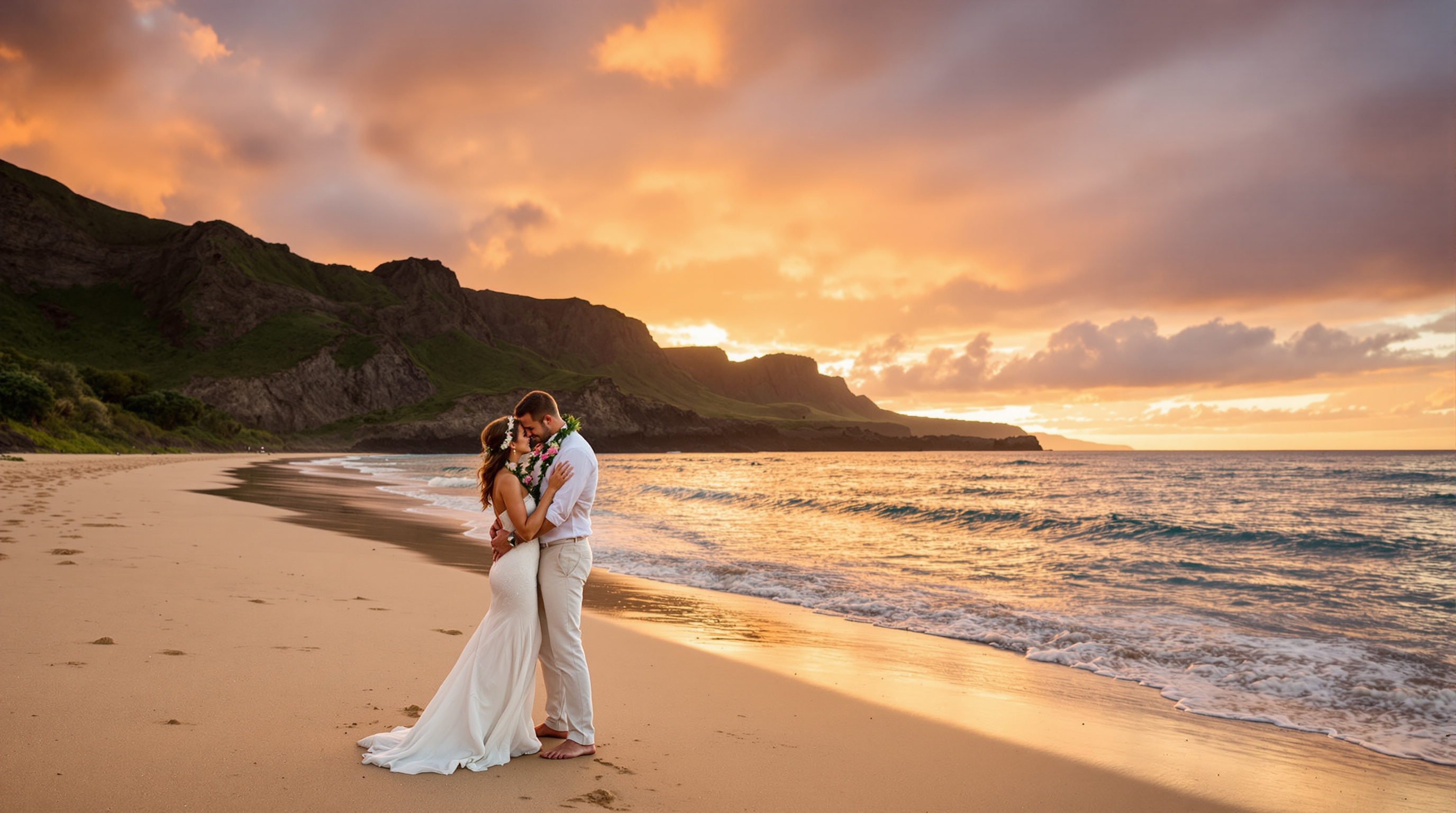
Being invited to record a wedding is a privilege. A photographer gets a special perspective on the day - the beauty, sincerity, joy and emotion of two people at the center of everything they love - and gets to keep those moments forever with the click of a shutter. After hundreds of weddings on Kauai's beaches, this studio learned what makes wedding photography on the Garden Island succeed, and this guide passes all of it on.
What to Look For in a Wedding Photographer
You need more than someone who arranges people into poses and owns good equipment. You want a photographer who puts you at ease and helps you enjoy the day without hindrance; who works graciously under pressure with a smile; who gives the right amount of guidance without being pushy. A talented photographer without those qualities can add stress to your wedding day. One with them adds to the joy. When you interview candidates, ask how they handle a sudden squall, a late ceremony, or a flower girl in tears - the answers reveal temperament faster than any portfolio. Credentials and directories at Professional Photographers of America are a sensible starting point for your shortlist.
Hire Local Knowledge
The original advice from this site still stands: do not trust your special day to someone who does not live here and know the area. Kauai's weather is hyper-local - rain in Lihue means nothing at Poipu - and its beaches change character by season. A photographer who knows that Tunnels Beach loses its sand in winter, or that the crowds at Kiahuna Beach thin out right at dinner time, will save your timeline more than once. Our essay on rain on Kauai explains why a wet forecast almost never means a canceled shoot.
Permits and Legalities
Commercial photography on Hawaii state beaches and parks generally requires a permit, and ceremonies on state unencumbered shoreline need a right-of-entry permit as well. Rules and applications are handled through the Hawaii Film Office and the Department of Land and Natural Resources. A professional working on the island will usually carry the necessary permits; if you are arranging things yourself, start the paperwork several weeks ahead. County and resort properties have their own rules - always ask.
For a wedding in a state park, the Special Use Permit guidance sets a longer planning clock: submit the request at least 45 days before the intended use and include a location map. Requests are considered individually, so submission does not promise approval. Proposed commercial events should be requested no less than 90 days ahead because Land Board approval may be needed. Groups of 26 or more picnickers or other day users also need a permit. Consider the whole gathering when planning the use of the space. The Kauai park reservations and permits guide brings these deadlines together with entry reservations and drone restrictions.
Timing the Day
Plan the ceremony to end roughly an hour before sunset. That puts vows in soft, flattering light and leaves the golden last half hour for couple portraits, when the sky does its best work. Summer sunsets on the north shore drop into the ocean; in winter the sun sets toward the west and south, which favors Poipu-side venues. Build in a weather buffer: the most dramatic skies of all often arrive in the twenty minutes after sunset, as our post on post-sunset light shows.
Engagement Sessions
Engagement is the season when love is new and everything is electric with anticipation. Years later, when you have endured storms, conquered heights and your love has grown deep and rich, photographs from those simpler days will refresh you - that is why engagement sessions matter beyond save-the-date cards. They are also a working rehearsal: an hour in front of the camera together teaches a couple how to be photographed, so the wedding-day portraits come easy. Kauai favorites for engagement shoots include the arch at Poipu, the river mouth at Wailua and the long empty sand of Lumahai.
A Realistic Shot List
- Details first: rings, flowers, dress, leis - before they are worn and weathered.
- The big group photo immediately after the ceremony, before anyone wanders off.
- Family combinations in descending size, organized by a designated wrangler who knows the names.
- Couple portraits at golden hour, unhurried - this is the half hour the album is built on.
- One night frame: torches, stars or the afterglow, for the closing page.
For honest numbers on what all of this costs on the island, see our pricing guide. And whatever you decide, remember the principle that ran this studio for two decades: a great experience produces great photos. Protect the experience and the photographs will follow.