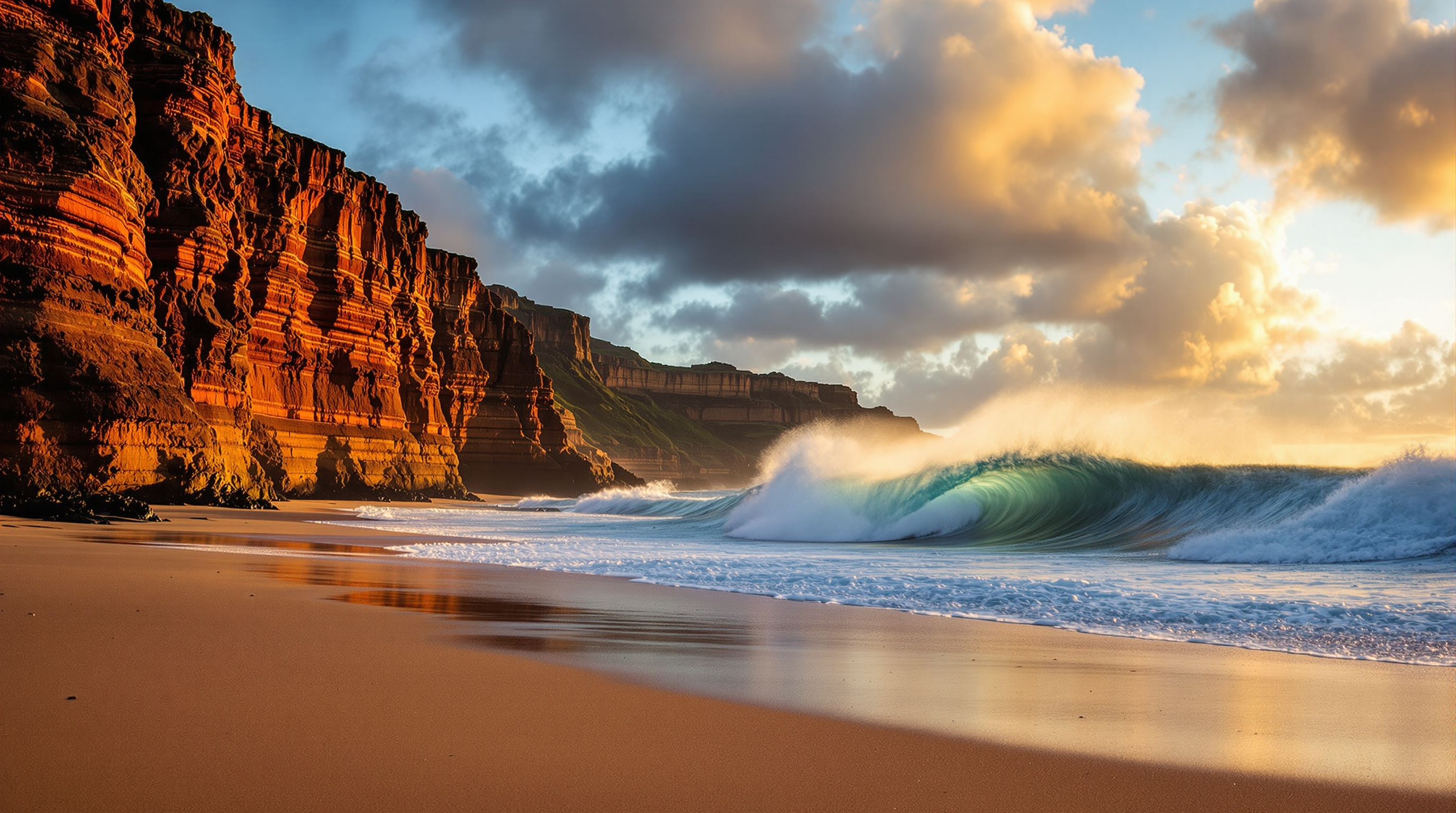
Keoneloa Bay - universally called Shipwrecks - is the south shore's wild card. While the Poipu beaches a mile west offer gentle resort crescents, Shipwrecks throws a broad, steep strand of golden sand against a lithified sandstone cliff that glows like cut amber in evening light, with a shorebreak that has starred in surf films and a cliff-top trail leading to dune views and an ancient heiau site. The studio brought couples and seniors here when the brief said "dramatic" and the calendar said winter, when this coast gets its best light.
Why Photographers Love It
Makawehi - the sandstone point at the beach's east end - is the reason. Wind and water carved the lithified dune into ledges, hollows and a clean high prow, and its warm tones photograph like nothing else on the island: not black lava, but layered gold stone that takes low sun spectacularly. Below it, the steep sand gives elevation lines for group arrangements; above it, the Mahaulepu Heritage Trail crosses dunes with long coastal views. The shorebreak - powerful, vertical, beautiful - supplies wave-explosion backgrounds all year. Add the south shore's reliable dryness and you have the island's most dependable drama.
Light and Timing
Late afternoon through sunset, October to March, is the prize window: the winter sun sets over the water to the southwest, frontlighting the cliff and gilding the spray. Summer sunsets move behind the land but the golden hour still works the stone handsomely. Mornings are quiet with soft sidelight - good for the trail and dune frames before the wind rises. The cliff face itself holds warm reflected light after the sand shades, extending sessions a precious twenty minutes.
Access and Practicalities
Public parking sits behind the beach by the resort; the sand is steps away and the cliff-top trail starts at the east end. Facilities are at the adjacent resort margin and Poipu's parks. The trail crosses culturally significant dunes - archaeological sites and a heiau lie along Makawehi; stay on the worn path, photograph structures from distance, and treat the area with the respect Hawaii's historic-preservation rules require, per the DLNR. Wind on the cliff top is constant - secure hats, dresses and tripods.
Conditions and Safety
The shorebreak is the serious hazard: it breaks in inches of water with full ocean weight, and injuries here are a fixture of island statistics. The studio's rule was absolute - nobody in the water, subjects above the wet line, and the famous cliff-jumping spectacle left entirely to others. The cliff edge crumbles; keep groups well back from the prow. Check Hawaii Beach Safety for the day's surf, which changes the usable beach dramatically.
Composition Ideas
- Couple against the glowing sandstone wall at golden hour - the signature Shipwrecks frame.
- Senior portrait on the high prow (well back from the edge), sky and sea wrapping the figure.
- Telephoto shorebreak explosions behind subjects on dry sand.
- Trail frames in the dunes, grass and stone layering toward Mahaulepu.
Season by Season
Shipwrecks splits cleanly into a portrait season and a power season. October through March is the portrait prize: the sunset swings over the water, the sandstone wall takes direct low light, and the south shore's dry winter weather makes scheduling nearly risk-free - the studio sold winter clients on this beach above all others. April through September brings the south swell - the shorebreak grows into its film-star reputation, the steep sand gets steeper, and sessions trade waterline frames for cliff-top and dune work, where the trail's morning light is at its best anyway. Whales pass offshore in winter, visible from Makawehi's prow; monk seals haul out on the sand in any month and command a legally required wide berth - photograph them with the longest lens you own and recompose the session around their nap. The cliff itself never takes a season off: amber stone in low sun works every month of the year.
Round out a south shore evening with Poipu Arch and Kiahuna minutes away - the trio is mapped in the location library.