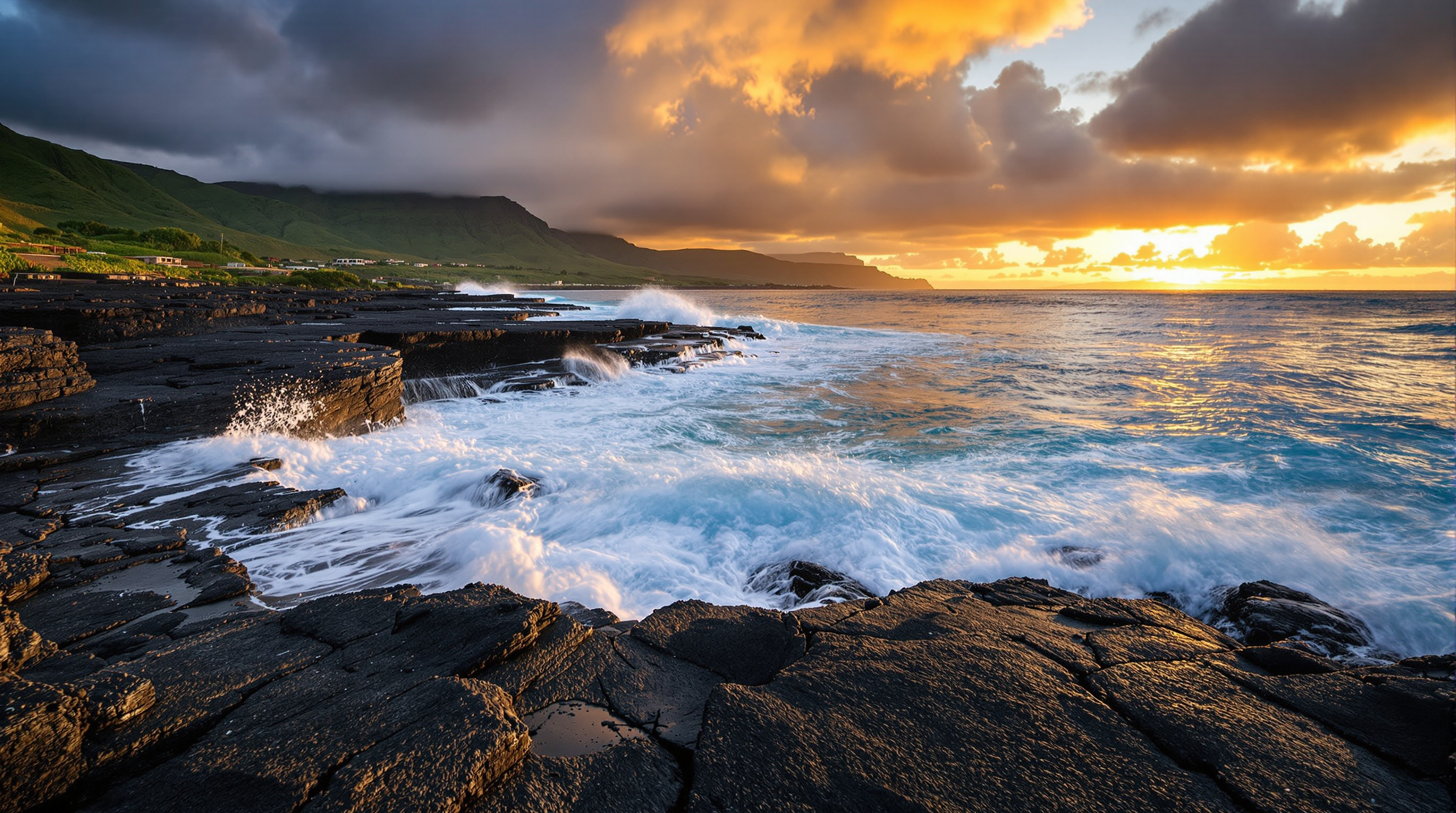
At the western end of Tunnels Beach the sand gives way to a low shelf of lava reaching toward the reef channel - the studio's list called it Tunnels Point, and kept it as a separate entry for good reason. The beach behind it is about softness: lagoon, trees, golden sand. The point is about edge: black rock, moving water and the long view down the coast toward the beginnings of Na Pali. Same parking, completely different photograph.
Why Photographers Love It
The point gives elevation and separation. Subjects standing on the shelf rise above the waterline, so a camera at beach level sets them against sky and mountain instead of sand - instantly more sculptural. The dark lava contrasts with light clothing beautifully, and in any swell the channel beyond throws up white water that adds energy a flat lagoon never provides. Look west and the coastline stacks into receding blue headlands; look east and Makana towers over the trees. For senior portraits and couples who want drama rather than sweetness, this was the studio's north shore pick.
Light and Timing
Golden hour onward, summer especially - the low western sun rakes across the rock texture and rim-lights subjects on the shelf. The point is also the best seat at Tunnels for the actual sunset, with open ocean west and the afterglow burning over the channel. On bright middays the black rock becomes contrasty and harsh; if you must shoot midday, keep people at the rock-sand seam where the trees still reach. Mornings work for moody, cool-toned frames with mist on the mountain.
Access and Practicalities
Access is Tunnels' access: park at Haena Beach Park and walk east along the sand, or claim one of the few highway pull-outs at dawn. The walk to the point adds five minutes past the main beach. Footing on the shelf is genuinely uneven - this is a closed-toe-shoes location, and not one for unsteady walkers or unsupervised small children. Stage gear on the dry sand and carry only the working camera onto the rock.
Conditions and Safety
This page earns its bluntest safety language. The shelf sits beside a reef channel with permanent current, and in winter surf the point is washed by surge that arrives without warning. The rule the studio never broke: nobody on wet rock - if the shelf shows water stains or spray reaches it, the session stays on sand. Check the swell at the National Weather Service Honolulu and the hazard listings at Hawaii Beach Safety before scheduling, and give the ocean your full attention whenever anyone is seaward of the sand.
Composition Ideas
- Couple on the dry shelf, shot from beach level at 35mm, sky and mountain wrapping them.
- Long lens west down the coast, subjects small against receding headlands - scale as the subject.
- Fast-shutter frames with channel white water bursting behind a senior portrait.
- Sunset silhouette on the point's outer dry knuckle, horizon clean behind.
Season by Season
The point and the beach behind it run opposite seasons. Summer makes the shelf a portrait stage: dry rock to its outer edge, gentle channel water and sunset directly off the point. Winter makes it an amphitheater - the surf that named Tunnels detonates on the outer reef, and the point becomes the best legal seat for telephoto wave work on this coast, shot from the high dry sand with subjects safely inland of the rock entirely. The transition months demand the most judgment: a flat morning can become a washed shelf by afternoon as a new swell arrives, so check the buoy trend, not just the current reading. Trade-wind season puts chop in the channel that reads as texture at fast shutter speeds - useful, not harmful. In every season the rule stands: the shelf is only ever as available as the ocean says it is that hour.
Pair the point with the main Tunnels Beach session - soft frames in the trees, drama on the rock - or compare the south shore's equivalent edges at Shipwrecks in the location library.