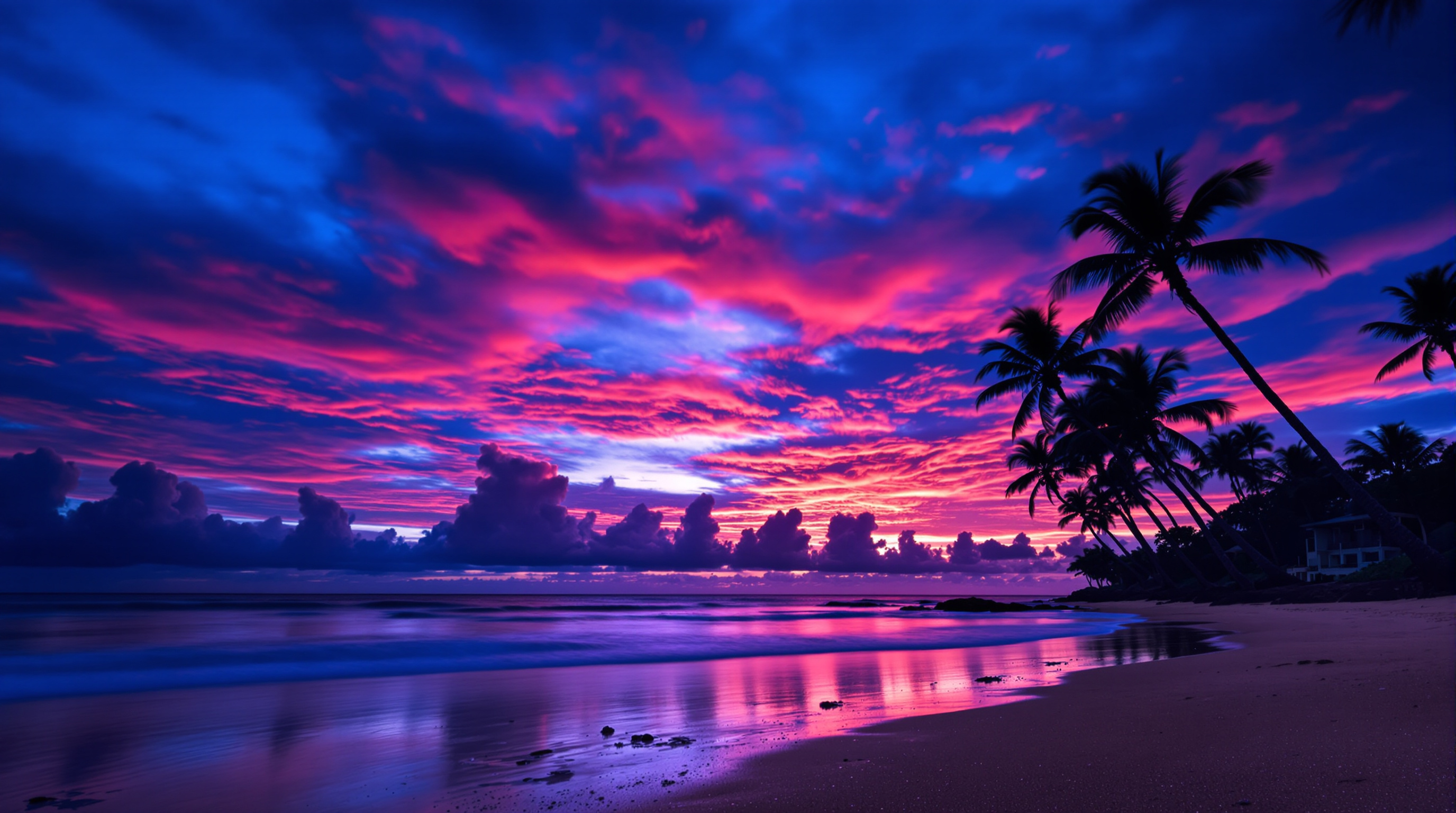
Most beach sessions on Kauai are scheduled to end at sunset, because that is when the light usually fades. But one evening the studio stayed late for a family with dinner plans elsewhere, shooting on after the sun had gone - and the sky repaid the gamble with some of the most dramatic light of the year. The lesson entered the permanent playbook: sometimes the show starts when the sun leaves, and the photographers who pack up at sunset miss it.
What Happens After the Sun Goes Down
Two distinct phenomena make post-sunset light special. The first is afterglow: for ten to twenty-five minutes after the sun drops below the horizon, it keeps lighting the underside of clouds from below. High clouds turn rose and crimson, mid-level clouds catch fire, and the entire eastern sky - the direction most people stop looking - can flush pink with the Belt of Venus. The second is blue hour, when the sky becomes a vast, even, cool-toned softbox. Skin tones photograph beautifully in it, and the ocean turns to liquid metal. NASA's atmospheric science pages explain the scattering physics behind twilight colors at science.nasa.gov, but the field summary is simple: clouds at the right altitude plus clean air equal an encore worth waiting for.
Why Kauai Does This So Well
Trade-wind cumulus clouds sit offshore at exactly the altitudes that catch under-lighting, and the island's clean mid-Pacific air keeps twilight colors saturated. West- and north-facing shores - Kiahuna and the Poipu coast in winter, Tunnels and Lumahai in summer - put the afterglow behind your subjects. Even the east shore joins in: the Belt of Venus over the ocean at Wailua River mouth is one of the island's quietest spectacles.
How to Shoot It
- Do not leave at sunset. Budget twenty-five extra minutes. The peak color usually arrives eight to fifteen minutes after sundown, and it can intensify twice before fading.
- For portraits, embrace silhouette and rim light first, then switch to blue-hour frames: faces toward the bright horizon, exposure up a stop, white balance left on daylight so the warm sky stays warm.
- Mind your shutter speed. Light falls fast; by twenty minutes past sunset you will be at wide apertures and ISO 1600 or steadying the camera on a rock. A small tripod earns its sand.
- One frame for the men. Dads and sons lit by nothing but the glowing western sky was a signature of this studio - directional, sculptural, slightly serious. It remains one of the most flattering ways to light men ever found on these beaches.
- Then turn around. The east sky's pink band over a darkening ocean is the frame nearly everyone misses.
Planning the Encore
Afterglow is a clouds-at-distance game: a clear horizon line with broken clouds above it is the winning hand, while a solid wall of cloud on the horizon usually ends the evening early. Check the satellite loop from the National Weather Service Honolulu before committing to a late stay, and pair this essay with rain on Kauai - the same cellular weather that makes island forecasts unreliable also clears horizons at the last minute. Schedule your session to end at sunset, but never let it actually end there. The island frequently has one more act.
Timing the encore is easier than it sounds because the sequence is reliable. Note the published sunset time, then treat the following half hour as three distinct windows: the first ten minutes belong to rim light and silhouette while the western sky is still bright, the middle ten are peak afterglow when the cloud undersides burn, and the last ten are true blue hour, when the ambient light finally becomes even enough to photograph faces without any horizon behind them. Knowing which window you are in tells you what to shoot next instead of hunting for it, and it is the difference between a bonus round and twenty-five minutes of guessing in falling light.
A Note on Patience
The hardest part of afterglow work is social, not technical: convincing a tired family to stay twenty more minutes after the "official" finish. The studio's solution was honest framing - calling the post-sunset frames a bonus round, with snacks - and the bonus round delivered the album cover more often than any other segment of the session.